Grand New Zealand Self-Drive
Auckland
22 nights
From
€4,299
pp

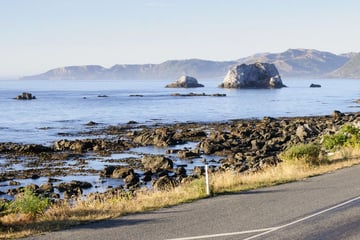
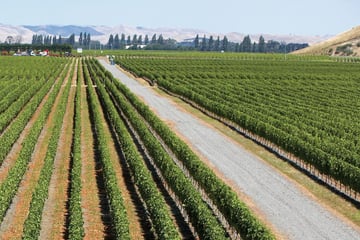
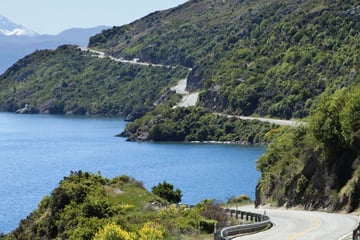
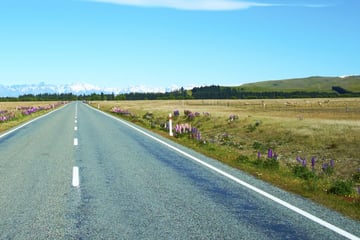
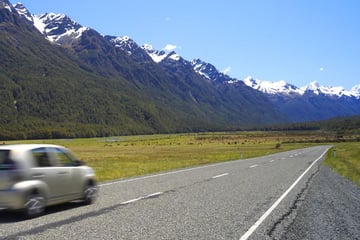
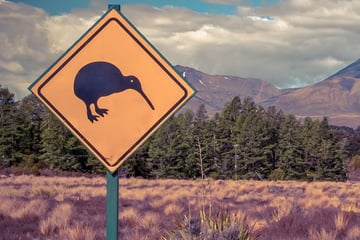
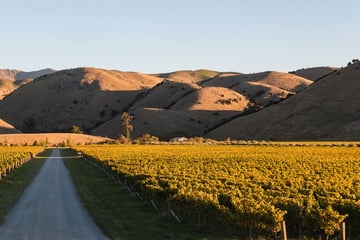
A self-drive tour through New Zealand is a trip of a lifetime. At New Zealand Sky, we think it’s the best way to experience the country – taking in stunning scenery at your own pace, stopping to capture photos whenever the view is too good to pass up, and venturing to hidden corners you might not see otherwise. Our advice? Be adventurous and inquisitive – turn left instead of right and see what you find. Some of the best moments on a New Zealand road trip are the unplanned ones.
Whether you’re planning your first self-drive New Zealand adventure or you’ve been dreaming of this trip for years, this guide covers everything you need to know – from choosing the right car and understanding fuel costs, to our favourite New Zealand self-drive itinerary taking in the best of both islands.
Our trip was planned for us and couldn’t have gone better. The driving times were perfect, the accommodation excellent and the places visited superb.” – Read Nigel and Dorothy’s full customer story here.
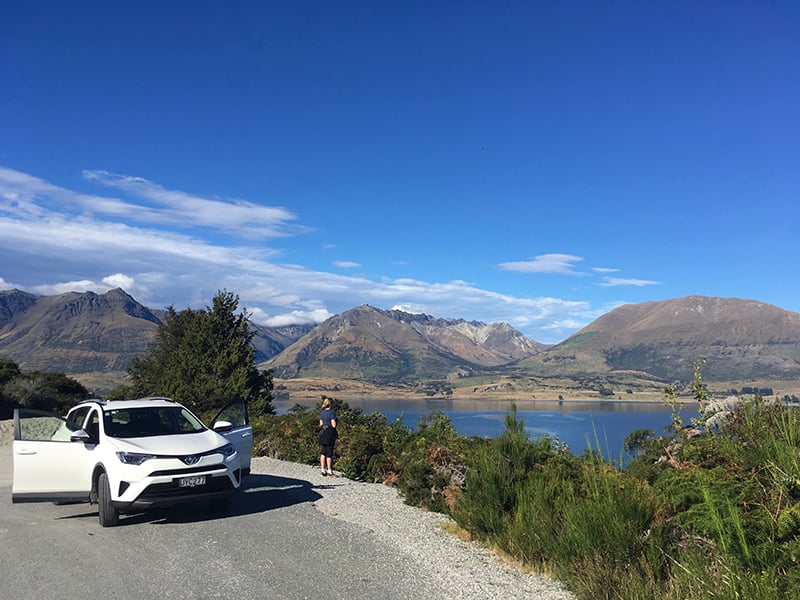
While the country is split into two islands, the inter-island ferry makes it easy to travel between the two while enjoying the magnificent sights of Marlborough Sounds along the way. As a rule, you will travel as a foot passenger on the ferry, drop off your vehicle first, hopping on as a passenger and picking up the next one after you’re on dry land.
Browse our New Zealand self-drive tours

For most travellers, we recommend an intermediate size car which will give you a bit of space but not too big to feel daunted by the size. We include intermediate cars for the same price as standard category for all our self drives.
For groups of more than 2 and for added comfort, we would recommend an SUV style vehicle.
Packing light is always a good idea and one of the most practical New Zealand self-drive tips we can offer – it will also make getting around airports and in and out of accommodation easier. Sat navs are not necessarily built in to hire cars so you may wish to bring along a phone holder and use your phone's sat nav app.

Unlike many places in Europe, the majority of car rentals in New Zealand are automatic. Intermediate categories typically have a manual option, though these tend to cost a little more. Plus automatic cars are far easier to use in a country you are visiting.
Fuel prices in New Zealand are similar to prices that you will pay at home. Hybrid and electric options can help to bring this cost down further.
Traffic volumes in New Zealand are comparably low, roads are well-maintained and New Zealanders tend to be careful and polite drivers. That said, it can be easy to underestimate journey times – the roads are narrower than you might expect, mostly two-way with one lane in each direction, and can be steeper and windier than they look on a map.
The good news is that Google Maps drive times are fairly accurate. We’d recommend adding around 10% as a buffer – this gives a more realistic estimate based on driving a compact car in light traffic and following the speed limit in good weather. Commute traffic, roadworks and photo stops will add to that time, and it’s always worth checking the weather forecast before heading out, as conditions can slow things down.
My New Zealand self-drive tip: I would recommend covering around 200-250km (120-150 miles) per day, which equates to roughly 3-4 hours of driving and ensures plenty of time to explore along the way. In fact, our motto for self-drives is see less to see more – allow yourself at least 2-3 nights for each stop, freeing up time to explore, meet the locals and get out of the car.

Driving is on the left in New Zealand, as you would at home in the UK and Ireland. If you’re flying in from a long distance across multiple time zones, always take at least a day or two to recover before venturing on your self-drive trip. Jet lag slows your reaction time, and combining fatigue with unfamiliar roads is a dangerous mix.
Before setting off on your New Zealand road trip, it’s worth getting familiar with a few local terms. Most roads in New Zealand are undivided with one lane in each direction. No overtaking zones are marked by solid yellow lines.
New Zealand has many untarmacked roads. As a rule you are not permitted to take hire cars vehicles on these roads, for good reason, they can be very remote and often require 4x4 off road driving experience.

All signposting follows standard international symbols, with distances in kilometres. Speed limit signs have a white background with a red circle and are displayed in km/h. The maximum speed on open roads is 100 km/h, in urban areas 50 km/h and through roadworks typically 30 km/h.
Part of the joy of a New Zealand self-drive is the roads themselves. Here are some of our specialists’ favourites:
The Milford Road is one of the most scenic in the world, heading deep into the remote Fiordland National Park through dramatic landscapes.
The Great Coast Road runs along the West Coast of the South Island with the Tasman Sea on one side and ancient forest on the other.
Lindis Pass is a personal favourite of mine – a high mountain pass en route from Queenstown to Wanaka with extraordinary expansive views.
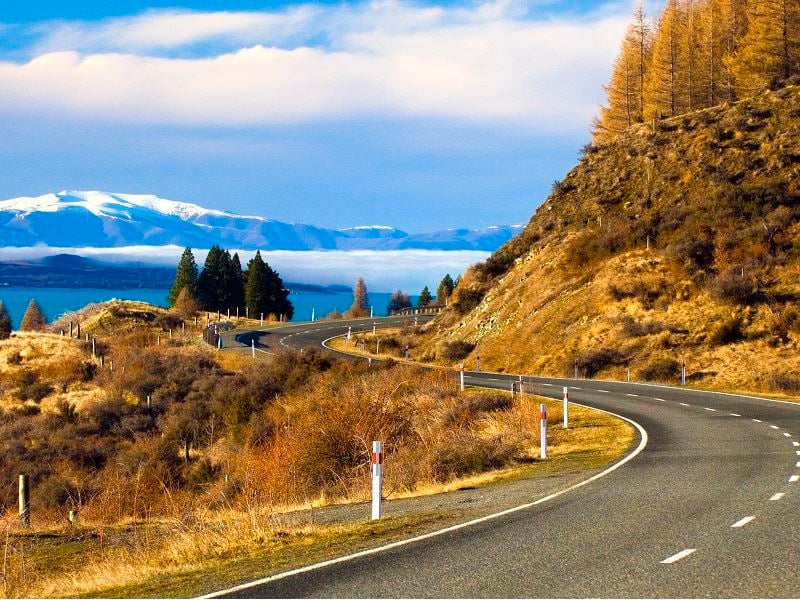
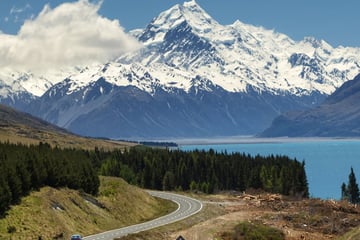
Mount Cook Road follows the shores of the breathtakingly blue Lake Pukaki with the imposing Mount Cook in your sights – an astoundingly beautiful drive.
Arthur’s Pass is the highest and most popular route across the South Island, winding through deep gorges, wide rivers and over an impressive viaduct.
Glenorchy Road is a short and easy day trip out from Queenstown to the village of Glenorchy – one of those drives where the view around every corner seems to better the last.
We believe three weeks is the sweet spot for a New Zealand self-drive – long enough to take in the best of both islands without feeling rushed, and short enough to keep the pace enjoyable.
Auckland
Most New Zealand fly-drive holidays begin in Auckland, and it’s worth giving yourself a few days here before getting on the road. The Sky Tower is a great first stop – the views on a clear day stretch as far as 50 miles. The Maritime Museum is worth a visit too, particularly for the sailing history. I recommend staying in the Viaduct Harbour / Britomart area in this vibrant city with a wonderful harbour front.
Bay of Islands
From Auckland, venture north to the Bay of Islands. The Bay of Islands is one of those destinations that looks incredible in photos and then somehow exceeds expectations in person. Over 140 islands, beautiful sandy beaches and abundant wildlife. The dolphin and whale-watching cruises and excellent and kayaking between islands is one of the more quietly magical things you can do in New Zealand.
On your way south, make sure to make a stop at Waipoura Forest to take a short walk among the Kauri trees, including the world’s oldest of this species. I love the Bay of Islands, and it must be included in your trip. With small coves, a wonderful coastline and a very historical area, it is worth as much time as you can allow to explore. It is also home to the mighty and impressive Kauri Tree.

Rotorua
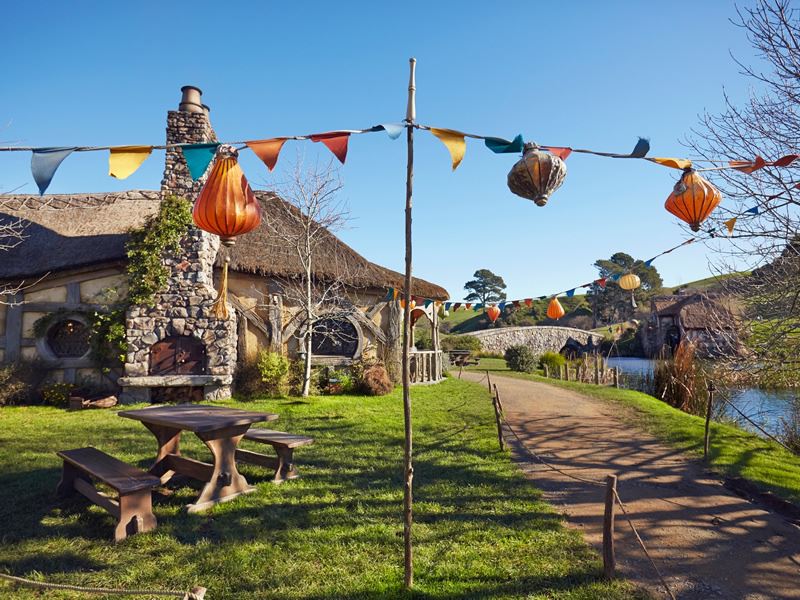
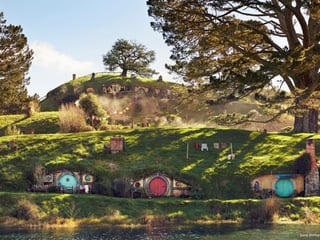
Rotorua is truly one of the most rewarding spots on the North Island. This is the heart of Maori culture in New Zealand, and the experiences here are worth setting aside some time for. You might choose to stop for a ride on the heritage train that travels through the gold mining history of Karangahake Gorge or visit the Hobbiton set – a must for Lord of the Rings and Hobbit fans.

Rotorua is also a hotspot for geothermal activity. We would recommend stopping to experience the Wai-O-Tapu Thermal Wonderland with its geysers, bubbling pools, waterfalls and sulphur ponds.


Dunedin
Dunedin is known for its rich Scottish heritage, which is prevalent in the street names and the Victorian and Edwardian architecture that lines the city centre. But we think the real draw is getting out onto the Otago Peninsula. This is the only place on the New Zealand mainland where you can watch royal albatrosses nesting. We would also recommend timing your visit to try and spot yellow-eyed penguins coming ashore at dusk – one of the world’s rarest penguin species.
Venturing west, you’ll reach Fiordland National Park, New Zealand’s largest national park and, in our view, one of the most dramatic landscapes on earth. The scale is hard to process – more than a dozen fjords carved by glaciers. Milford Sound is the centrepiece, and a morning nature cruise is one of our favourite ways to experience Fiordland with postcard-perfect scenery and wildlife such as penguins, seals and dolphins.
I swear by Doubtful Sound as an unmissable addition to this route. Three times the length of Milford Sound and far less visited, the sense of unspoiled beauty is something truly special.

Queenstown
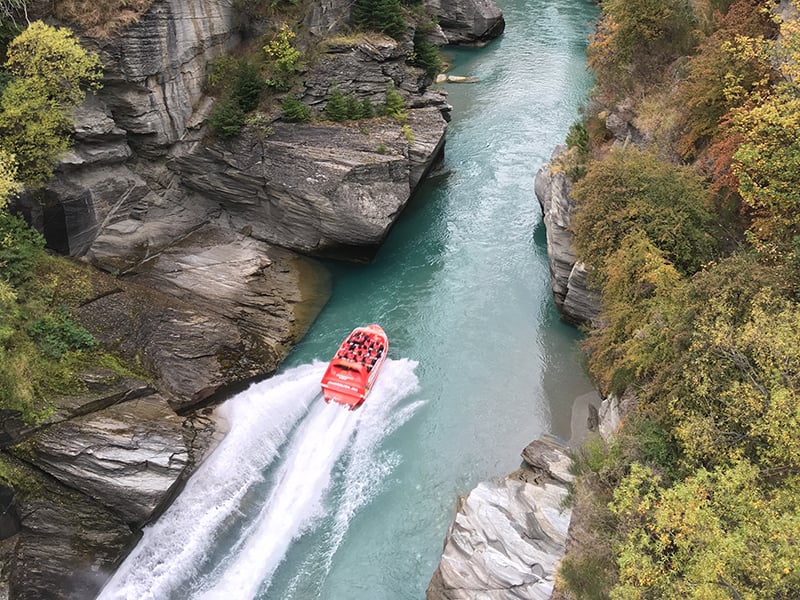
The drive into Queenstown sets the tone perfectly – mountains rise sharply on either side as the road follows the shores of Lake Wakatipu. Queenstown earns its reputation as the “Adventure Capital of the World”, and whether you’re here for bungy jumping, skydiving, jet boating or simply hiking the trails above town, it delivers. We think the setting alone, surrounded by the Remarkables mountain range, makes it worth every minute. Everyone must stay in Queenstown, a brilliant base for so many activities with a fantastic restaurant and bar scene. It's just good fun.
For a wonderful short scenic drive, follow Lake Wakatipu to the end of the road and visit Glenorchy. There are some great hikes from here and quaint shops and restaurants to visit.
From Queenstown, we recommend taking the Crown Range road to Wanaka – New Zealand’s highest sealed road. On a clear day, the views from the top are breathtaking. We would also suggest stopping for a walk through the beech forest in Mount Aspiring National Park before continuing north along the West Coast to Fox Glacier and Franz Josef.
We would strongly recommend the helicopter and hike combination at Franz Josef – it’s one of those rare experiences that genuinely exceeds every expectation. You land on ice, with the glacier stretching out towards you and the snow-capped peaks surrounding you in every direction.
This incredible New Zealand road trip ends on a high – drop the car off in Greymouth and board the TranzAlpine train back to Christchurch. Ranked among the world’s top train journeys, this breathtaking journey along the South Island’s west coast with views of snow-capped peaks.
Interested in this itinerary or similar? Take a look at our self-drive holidays
New Zealand drives on the left – making life a little easier for those of us in the UK and Ireland.
If you have a current driver’s licence, you can drive in New Zealand for up to 18 months, offering lots of flexibility for your trip. If your licence is not in English, you must carry an accurate English translation.
Self-driving New Zealand as a first timer is very manageable and one of the best ways to explore the country. The roads are well-maintained, well signed and most of the iconic scenery is easily accessible by car.
We would recommend covering around 200-250km (120-150 miles) per day, taking roughly 3-4 hours.
Most people will look to visit both islands. The North Island is gorgeous and places are easy and relatively quick to get to. If you want the absolute picture postcard mountain scenery head to the South Island as a great finish to your self drive adventure.
At New Zealand Sky, we've been crafting self-drive holidays to New Zealand for over 20 years. All our itineraries are hand-picked by our NZ specialists, include pre-booked accommodation on every night, and come with 24/7 support while you're on the road?


Sign up to our newsletter
Be the first to know about our exclusive offers and holiday inspiration by email.