Grand New Zealand Self-Drive
Auckland
22 nights
From
€4,299
pp

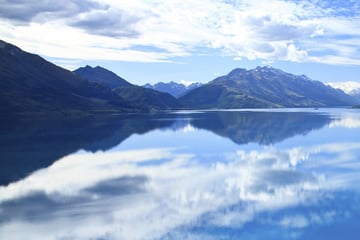
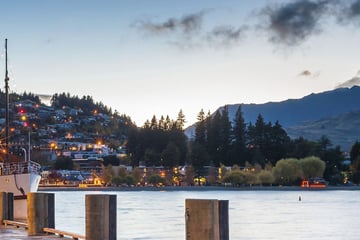
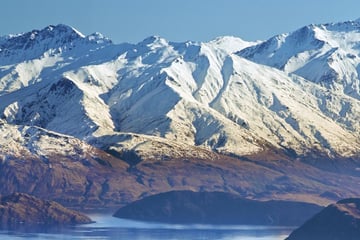
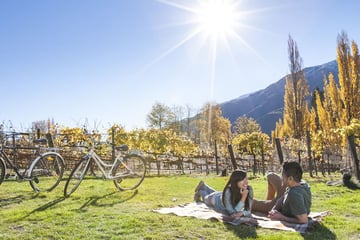
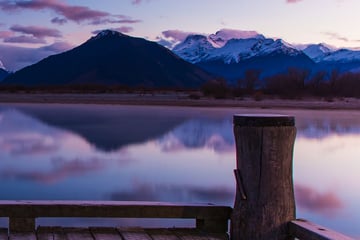
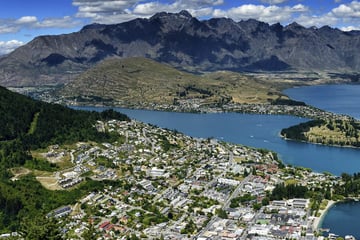
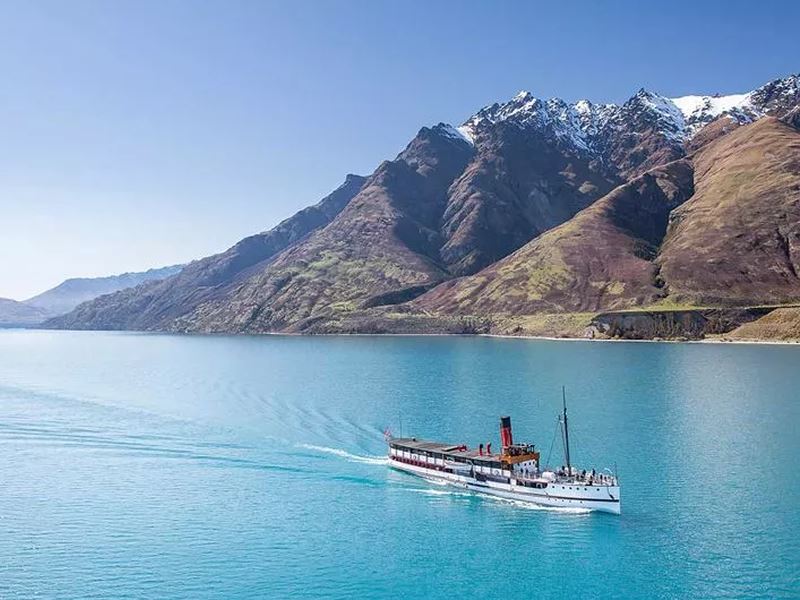
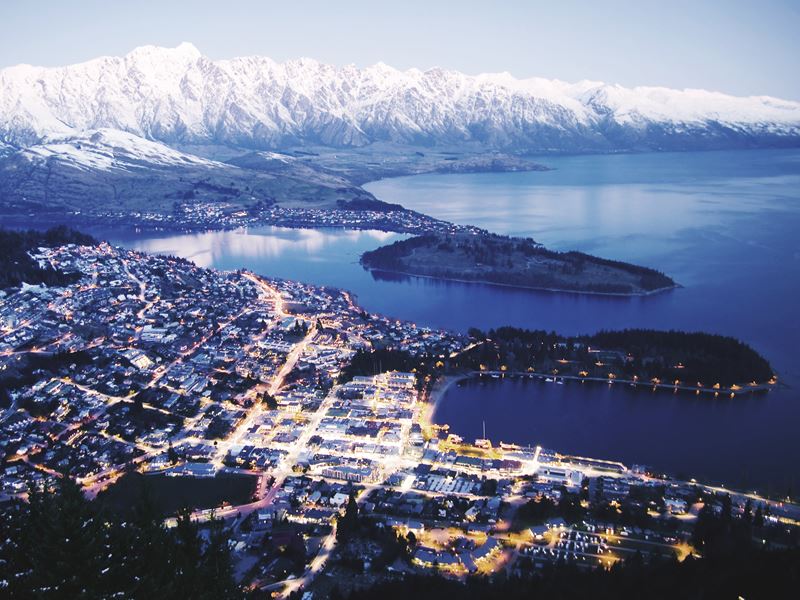
Queenstown is one of those places that hooks you the moment you arrive. The air is different here – clearer, crisper, charged with possibility. Sitting on the edge of glacier-carved Lake Wakatipu, framed by the jagged peaks of the Remarkables Range, it's the kind of town that makes you want to lace up your boots before you've even unpacked. New Zealand's self-styled adventure capital earns its reputation across every season: powder snow and night skiing in winter, epic hiking and jet boating in the long, luminous summer days, and vineyard trails ablaze with colour come autumn.
But as spectacular as Queenstown is, one of its greatest strengths is what lies just beyond it. The South Island unfolds in almost every direction – ancient fjords, gold rush ghost towns, alpine national parks and glittering lakes – and most are within easy reach for a day trip. Having helped UK travellers explore New Zealand for over two decades, we at New Zealand Sky know that choosing your base wisely and getting out early are the two secrets to making the most of this extraordinary region.

All these destinations are perfect for a day trip from Queenstown or can be integrated into a self-drive itinerary of the South Island. Our South Island Natural Discovery, A Taste of the South and Drive and Hike around the South Island itineraries all factor in stops like these, with the logistics already taken care of.
• Heading north from Queenstown
• Heading west from Queenstown
• Heading south from Queenstown
• Heading east from Queenstown

Just 20 minutes up the road, Arrowtown feels like a different world – and in some ways, it is. This was once one of the most frantic corners of the South Island, when gold was discovered in the Arrow River in 1862 and thousands of prospectors descended in search of fortune. The rush didn't last, but the town it built has endured beautifully. Today, leafy lanes lined with stone cottages, independent boutiques and excellent cafés give Arrowtown a charm that's entirely its own.
Don't rush through – take the time to browse the Lakes District Museum, which tells the full story of the area from its Maori roots through to the pioneering era, and have a go at gold panning in the shallows of the Arrow River. In autumn, Arrowtown becomes arguably the most photogenic place in New Zealand, when the poplars and willows planted by early settlers turn a blaze of gold and amber. If you're visiting in late April, the annual Arrowtown Autumn Festival is worth timing your trip around.
An hour from Queenstown along the Cardrona Valley, Wanaka is the South Island's quieter, more contemplative alternative to its famous neighbour – and many travellers end up wishing they'd spent more time here. The town sits at the edge of Lake Wanaka, with Mount Aspiring National Park as a backdrop, and on a clear day the views across the water are genuinely breathtaking.

There's plenty to fill a day: lake cruises, stand-up paddleboarding, jet boat tours along the Matukituki River, and over 750 kilometres of walking trails for those who want to stretch their legs properly. Wanaka is also surrounded by wine country – try the cellar doors along the Wanaka wine trail for Central Otago Pinot Noir that punches well above its latitude. Winter visitors will find two world-class ski resorts within 40 minutes' drive: Treble Cone (superb for intermediate and advanced skiers) and Cardrona (a favourite for families).
One honest tip from us: the road over the Haast Pass to Wanaka is one of the most spectacular drives in the country – allow extra time so you can actually stop and take it in.

For serious hikers and nature lovers, this is the day trip that requires the earliest start - Mount Aspiring National Park is about two hours from Queenstown, but worth every minute of the drive. Named after one of New Zealand's highest peaks (Mount Aspiring / Tititea, standing at 3,033 metres), the park forms part of the vast Te Wahipounamu UNESCO World Heritage Area, covering over 3,500 square kilometres of mountains, valleys, glaciers and rivers.
On a day visit, the 30-minute Blue Pools Walk is a lovely, accessible option - the trail winds through silver beech forest and crosses a swing bridge to pools of extraordinary turquoise clarity. More ambitious walkers should tackle the half-day Rob Roy Glacier Track (roughly four to five hours return), which rewards with up-close views of hanging glaciers and ribbons of waterfalls tumbling down the valley walls. If you have more time to spare, the Routeburn Track and Rees-Dart Track are among the country's finest multi-day adventures - something our team can help you plan properly, with accommodation and transport sorted before you leave home.

Not for the faint-hearted driver - Skippers Canyon Road is narrow, unsealed and perched dramatically above the Shotover River gorge - but the views it delivers are genuinely extraordinary. About 35 minutes north of Queenstown, this is one of the most atmospheric road trips in the region. The route was blasted and hand-drilled by gold miners in the 1880s, and it still feels like stepping back into that era as you wind along the canyon wall with the river far below. Stop at the lookout points for views across to the Richardson and Harris Mountains, and check local road conditions before you head out, particularly in wet weather.
The highest main road in New Zealand tops out at 1,121 metres, and the Crown Range Road between Queenstown and Wanaka is one of those drives that earns gasps from even well-travelled passengers. The panoramic views over the Otago countryside and the Arrowtown valley below are genuinely spectacular on a clear day. Do note that the road can require snow chains in winter and is best avoided in icy conditions - a sensible swap for the safer Gibbston Valley route if you're visiting between July and September. A stop at the historic Cardrona Hotel - one of New Zealand's oldest pubs, licensed since 1863 - is practically obligatory.
If you're visiting Queenstown between late June and October, Coronet Peak is the most convenient winter day out - just 20 minutes from town, with lifts serving runs across 280 hectares from an elevation of 1,187 metres. It's the only ski field in New Zealand to offer night skiing on Fridays and Saturdays, which is an experience in itself - carving turns under floodlights with the lights of Queenstown glittering in the valley below. There are trails for every level, a well-regarded ski school for beginners, and dedicated programmes for children that mean parents get proper time on the mountain.

45 minutes northwest of Queenstown along the shores of Lake Wakatipu, Glenorchy sits at the head of the lake like a reward for the drive. And what a drive it is - one of the most beautiful lakeside roads anywhere in New Zealand, with mirror-flat water on one side and mountains pressing in on the other. The town itself is tiny, but the surrounding landscape is extraordinary: it served as the backdrop for Isengard, Lothlórien and Amon Hen in Peter Jackson's Lord of the Rings trilogy, and standing in the valley, it's easy to see why the filmmakers fell in love with it.
Glenorchy is a wonderful place to slow down - kayak on the lake, saddle up for a horse trek through the valley, or simply find a bench by the water and let the scenery do its work. Some of New Zealand's finest multi-day walking tracks, including the Routeburn and the Greenstone/Caples, start here. It's also worth timing your day trip to have lunch at the Glenorchy Café, a relaxed spot where the food is good and the view from the deck is absurdly beautiful.
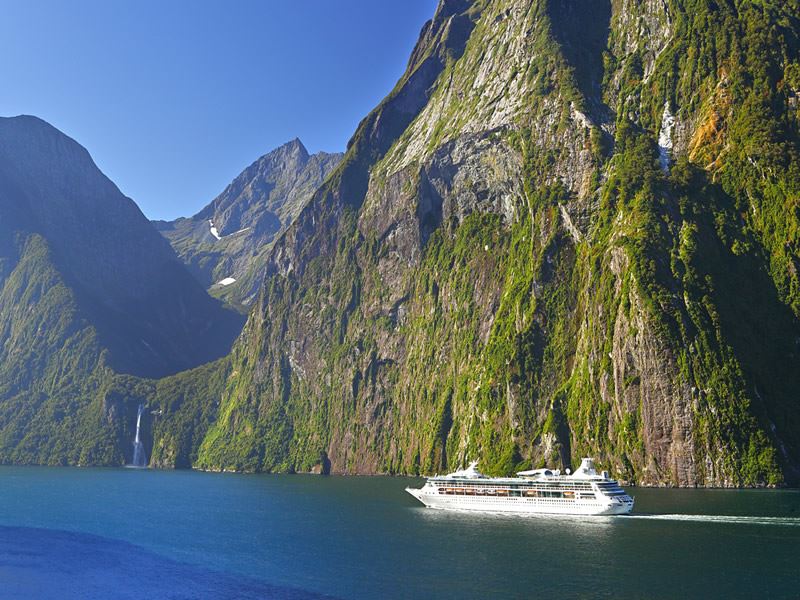
There are places that photographs simply cannot prepare you for. Milford Sound is one of them. Rudyard Kipling called it the eighth wonder of the world, and while the description might seem like hyperbole, standing on the deck of a cruise boat beneath Mitre Peak - which rises almost vertically to 1,692 metres straight from the water - it's hard to argue. The fiord sits at the heart of Fiordland National Park, accessed via a three-hour-plus drive from Queenstown along the spectacular Milford Road.
We'll be honest: the day trip from Queenstown to Milford Sound is long - you'll spend more time in the car than at the sound itself if you're not careful, so we generally recommend building in an overnight stop at Te Anau, or joining a tour that handles all the logistics for you. That said, the drive itself is worth experiencing: the Eglinton Valley, the Mirror Lakes pull-off, and the descent through the Homer Tunnel (blasted through solid granite and taking 19 years to complete) are all highlights in their own right.
Once there, take a cruise out through the fiord - most run for around 90 minutes to two hours and head as far as the Tasman Sea. Watch for New Zealand fur seals basking on rocks, Fiordland Crested Penguins nesting along the shoreline, and bottlenose dolphins that often escort boats through the fiord. Milford Sound receives an average of around 6,700mm of rain per year, making it one of the wettest places in the country - but don't be put off by a rainy forecast. When the waterfalls are in full flow, the place becomes even more dramatic, with hundreds of temporary cascades tumbling off every cliff face.

Kingston sits at the southern tip of Lake Wakatipu, just 45 minutes from Queenstown, sandwiched between the Hector and Eyre mountain ranges. It's a quieter, more understated day trip than some on this list - this was once a key transport hub linking the gold fields of the Wakatipu basin to the ports of Invercargill and Dunedin, and the historic Kingston Flyer steam train once ran from here - but today it's a wonderfully peaceful escape. Walk or cycle the lakeshore, try watersports on the lake, and explore the nearby Eyre Mountains Conservation Park on foot.
Covering 12,607 square kilometres, Fiordland National Park is the largest national park in New Zealand and one of the largest in the world - a vast, largely untouched wilderness of rainforest, peaks, deep valley systems, wetlands and the famous sounds. It forms the heart of the Te Wahipounamu World Heritage Area, and its scale is almost impossible to fully comprehend unless you've stood in it.
For a day visit from Queenstown (the park boundary is roughly two hours away), the most accessible focus is the area around Te Anau, the gateway town, from which you can organise cruises to Milford and Doubtful Sounds, or explore some of the shorter walking tracks near town. The park is frequently referred to as the 'Walking Capital of the World', with over 500 kilometres of maintained tracks. Its two most celebrated walks - the Kepler Track (60km, four days) and the Milford Track (53.5km, four days) - are among the finest Great Walks in the country and both require advance planning. If you'd like to tackle either, our team can help you secure hut bookings and sort transport as part of a wider South Island itinerary.

While Milford Sound tends to steal the headlines, plenty of travellers who've been to both will tell you that Doubtful Sound stole their heart. Three times longer than Milford at around 40 kilometres, and the deepest of New Zealand's fiords at 421 metres, Doubtful is wilder, more remote and markedly quieter - a place where you might float in near-silence with only the call of a Fiordland Crested Penguin or the blow of a bottlenose dolphin for company.
Access is more involved: you travel by bus over the Wilmot Pass to reach Deep Cove, the departure point for fiord cruises, and the journey from Queenstown takes around two hours. Most day tours combine the road crossing with a cruise and return the same day, though an overnight option exists for those who want to experience the fiord as dusk settles. Browne Falls - at 619 metres one of the tallest waterfalls in New Zealand - is among the sights that will stay with you.
Te Anau is most commonly treated as a staging post for Milford and Doubtful Sound cruises, but the town deserves more credit as a destination in its own right. The main draw is the Te Anau Glowworm Caves - take an evening boat trip into the limestone cavern system beneath Lake Te Anau and you'll emerge into a chamber where thousands of glowworms stud the ceiling like stars. It's genuinely magical, and unlike the more famous waitomo caves in the North Island, it tends to feel less crowded.

Beyond the caves, there are horse treks across the Te Anau basin, kayak tours on the lake, and the excellent Fiordland National Park Visitor Centre in town, which gives excellent context for the ecology and history of the region. Keep your eyes open for the Fiordland Crested Penguin - a rare and charismatic species whose breeding season runs between August and November.

Central Otago is one of the world's most southern wine regions, and the Gibbston Valley - known locally as the 'Valley of the Vines' - is its most celebrated stretch. The combination of high altitude, schist soils and dramatic temperature swings between day and night creates conditions that produce some of the finest Pinot Noir in the southern hemisphere. There are around a dozen cellar doors in the valley, many set right against the rocky gorge walls.
Head just over an hour east of Queenstown through the gorge, passing through the gold rush towns of Cromwell and Bannockburn, to reach Alexandra. From here you can explore cycle trails that connect the vineyards, sample locally grown stone fruits (the area is known for its cherries and apricots in season), and cruise the River Clutha to see remnants of the gold mining operations that shaped this landscape in the 1880s.
One of New Zealand's most celebrated cycling routes, the Otago Central Rail Trail follows a 152-kilometre former railway line through some of the most arresting high-country scenery in the South Island. Constructed between 1891 and 1907 to link Dunedin with the Otago interior, the line is now decommissioned but the trail it left behind has become a destination in its own right - frequently cited as one of the country's finest off-road cycling experiences.
The full trail takes at least four days to complete, but for a day trip from Queenstown, drive an hour east to Clyde and cycle the eight-kilometre section to Alexandra, crossing the impressive Muttontown Viaduct along the way. It's a wonderful ride through open countryside with good cafés at either end - and a relaxed, flat gradient that means most fitness levels can manage it.
The Remarkables is the ski area that catches the eye from Queenstown itself - those serrated ridgelines, often snow-capped from June through October, are one of the defining features of the town's skyline. Just a 30-minute drive from the centre, the area has undergone significant investment in recent years, with high-speed chairlifts and an impressive spread of terrain from gentle beginner slopes to testing off-piste terrain for experienced skiers and boarders. The views from the upper lifts - back across Lake Wakatipu toward Queenstown - are extraordinary. On a clear winter's day, this is as good as skiing gets.

About 45 minutes east of Queenstown, the Kawarau Gorge cuts through the schist and rock of the Gibbston Valley in dramatic fashion. This gorge played a central role in the Otago gold rush of the 1860s - you can still spot old miners' cottages and workings along the steep banks - and the Goldfields Mining Centre at Kawarau is a worthwhile stop for anyone who wants to understand the history properly, with guided tours of tunnels and shafts.
For those with a head for heights, Kawarau Bridge is where it all started - this is the original home of commercial bungy jumping, where AJ Hackett made history in 1988. Watching first-timers take the plunge from the viewing platform is an entertainment in itself. The gorge is also a favourite with river surfers, and the Roaring Meg lookout point gives a brilliant vantage over the churning water below.
Heading south to Invercargill? Follow some of these stops on the Southern Scenic Route:

If you’re heading up from Queenstown to the North Island, here are some stop-off suggestions:
Find more suggestions in our South Island Coast to Coast, Length and Breadth of New Zealand or Classic New Zealand self-drive itineraries, which take in highlights of the North and South islands.
At New Zealand Sky, we've been crafting holidays to New Zealand for over 20 years — and the South Island never gets old for us. Every itinerary we put together is shaped by genuine first-hand knowledge of the routes, the roads and the hidden gems that make this corner of the world so special. Our New Zealand specialists hand-pick every element, from your hire car and pre-booked accommodation on every single night, to the day trips and experiences that suit your pace and interests.
Whether you're dreaming of a week exploring the Queenstown region or a grand self-drive taking in the full length of the South Island, we'd love to help you plan it properly. Browse our South Island self-drive itineraries or give our team a call on 01342 310 581 — we're open 9am–7pm Monday to Friday, and 9am–5pm at weekends.
It depends on your pace, but most visitors have three to five days in the Queenstown area — enough to do two or three day trips comfortably alongside time in the town itself. We'd always recommend prioritising quality over quantity: a leisurely day in Milford Sound or Wanaka is far more rewarding than rushing three destinations in a row. If you're keen to cover more ground, it's worth considering basing yourself in Te Anau for a night or two, which opens up Milford and Doubtful Sounds without the long return drive to Queenstown.
Yes — but go in with realistic expectations. The drive is around three hours each way, which means a full day out with limited time at the sound itself if you're self-driving. Our honest recommendation is to either join an organised tour that handles the logistics, or build in an overnight stop at Te Anau so you can arrive early, before the day-trip coaches. The drive through the Eglinton Valley and Homer Tunnel is genuinely spectacular in its own right, so leaving time to stop along the way makes a real difference.
Arrowtown is hard to beat — it's just 20 minutes away, endlessly explorable and genuinely interesting for all ages. Kids love gold panning in the Arrow River, and the town's compact layout means it's easy to manage with younger travellers. Glenorchy is another great option for families who want wider open spaces and the chance to spot the Lord of the Rings landscapes that many children recognise immediately. For older kids and teenagers, the Remarkables or Coronet Peak ski areas (in winter) and the Shotover Jet are reliable crowd-pleasers.
Both work well, and the right choice depends on your travel style. A hire car gives you complete flexibility — you can linger somewhere longer, take spontaneous detours and travel at your own pace. Organised tours make more sense for destinations like Milford Sound and Doubtful Sound, where the logistics are genuinely complex and a guide adds real value. Many visitors do a mix of both: self-drive for closer destinations like Arrowtown and Wanaka, and guided tours for the more remote fiords. Our team can help you decide what works best for your itinerary.
Queenstown works brilliantly year-round, which is one of the things we love about it as a base. Summer (December to February) gives you the longest days and the best conditions for hiking, lake activities and the scenic drives. Autumn (March to May) is arguably the most beautiful, particularly around Arrowtown, which turns spectacular shades of gold and amber. Winter (June to September) transforms the region into a ski destination, with Coronet Peak and the Remarkables both on the doorstep. Spring (October to November) is quieter and often underrated — waterfalls are at full flow and the landscapes are lush and green.



Sign up to our newsletter
Be the first to know about our exclusive offers and holiday inspiration by email.