New Zealand Highlighter
Auckland
13 nights
From
€7,199
pp

Author: Chris, Programme Director
New Zealand’s landscapes are among the most varied on the planet. In a single trip you can sail through fjords, stand beside a glacier, walk across a volcanic crater and wander through the sort of rolling green hills that made Middle-earth feel real on film.
The Kiwis take looking after all of this seriously. Many of these places are of deep cultural importance to Maori, and they’re also home to rare birds and wildlife you won’t find anywhere else. If you want to see the wild side of New Zealand, a national park is the place to do it.
There are 13 national parks in total, spread across the North and South Islands. After many years planning trips here, we’ve picked our ten favourites, starting with the one we’d put first. Whichever you choose, a little preparation goes a long way. The weather in the mountains can change quickly, so pack layers and a waterproof. Popular tracks and huts often need booking well ahead through New Zealand’s Department of Conservation. And leave time to enjoy the scenery rather than rush it.

#1 - Rakiura
Rakiura is the baby of the bunch, created in 2002, and it covers most of Stewart Island/Rakiura, New Zealand’s third-largest island. It lies south of the South Island, across Foveaux Strait. You can get there by ferry from Bluff or a short flight from Invercargill.
Allow a few days to really switch off. The island has mountains, valleys, forest and a rugged coast, plus a quiet, laid-back village at Oban. It’s famous for rain, so bring welly boots and a waterproof, and if you get a dry day, head to Mason Bay on the west coast. It’s one of the best places in New Zealand to see wild kiwi, sometimes even in daylight. A trip to Ulva Island, a predator-free bird sanctuary, is a must too.

#2 - Fiordland
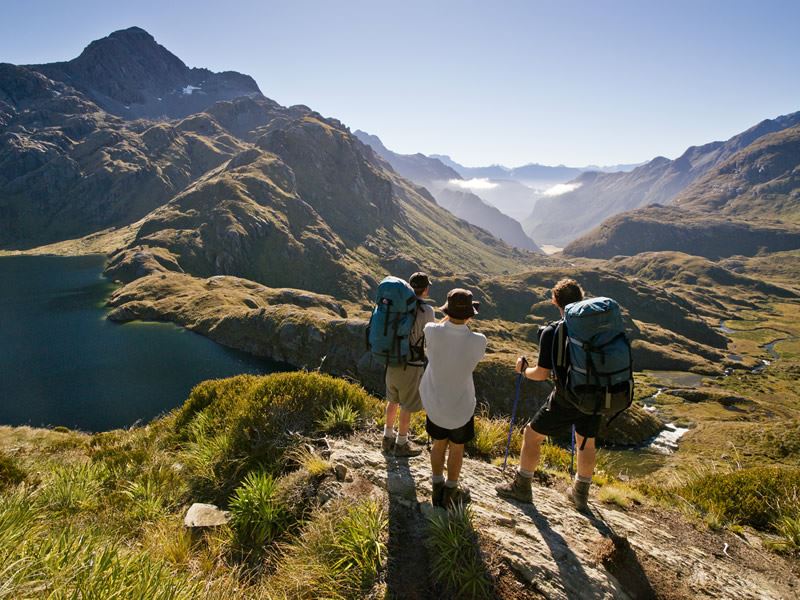
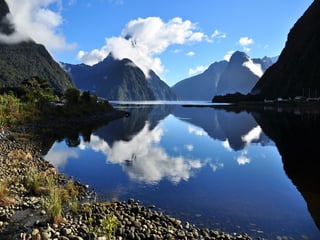
At almost 5,000 square miles, Fiordland is New Zealand’s largest national park and one of the largest protected areas in the world. It’s a wild landscape of mountains, lakes, waterfalls, rainforest and deep fjords, including the famous Milford Sound and the quieter, more remote Doubtful Sound.
It’s a dream for photographers and walkers alike, with the Milford, Routeburn and Kepler tracks all within or close to the park. Fiordland is one of the wettest places on Earth, so pack waterproofs, but honestly, the waterfalls are at their best after rain. Explore our Queenstown & Fiordland page for ideas.

#3 - Tongariro
Tongariro is New Zealand’s oldest national park, and one of the oldest in the world, gifted to the nation by Maori leaders in 1887. It’s a dual World Heritage Site, recognised for both its natural and cultural importance, and covers more than 300 square miles in the centre of the North Island. Active volcanoes, including Ngauruhoe and Ruapehu, dominate the landscape.
The Tongariro Alpine Crossing is the headline walk, about 12 miles (19.4 km) and often described as the best day walk in the country. Be realistic about it: it’s a long, tough day of six to eight hours, and the weather on the mountain can turn quickly. Check conditions before you set off, and go prepared. Fans of the films will spot some familiar scenery too, and our Lord of the Rings Scenic Explorer Self-Drive is designed for exactly that. Winter brings skiing and snowboarding on Ruapehu.

#4 - Abel Tasman
At about 87 square miles, Abel Tasman is New Zealand’s smallest national park, but it’s one of the most popular. It sits at the top of the South Island, between Tasman Bay and Golden Bay, with golden beaches, clear turquoise water and forested hills.
The Abel Tasman Coast Track is a Great Walk, and one of the most beautiful. You can walk sections of it, and use water taxis to get around, or explore by kayak. It’s lovely, but it’s far from undiscovered, so in summer it’s best to book accommodation and water taxis in advance. Visit in spring or autumn if you’d like a quieter experience. See more on our Nelson & Abel Tasman page.

#5 - Westland Tai Poutini
The west coast of the South Island is one of the most scenic in the world, and Westland Tai Poutini National Park is its crown. Around 450 square miles of glaciers, lakes, rainforest and wild, windswept beaches make up the landscape, and the Franz Josef and Fox glaciers are the headline attractions.
The coast has a gold-mining past, and traces of that history can still be found. For something a little different, the Copland Track leads to the Welcome Flat hot springs. It’s a long walk, usually done with an overnight stay at the hut, so it’s best for keen walkers. Rain is common on the West Coast, so we’d always recommend a couple of nights here for flexibility. Read more on our West Coast page.

#6 - Mount Cook
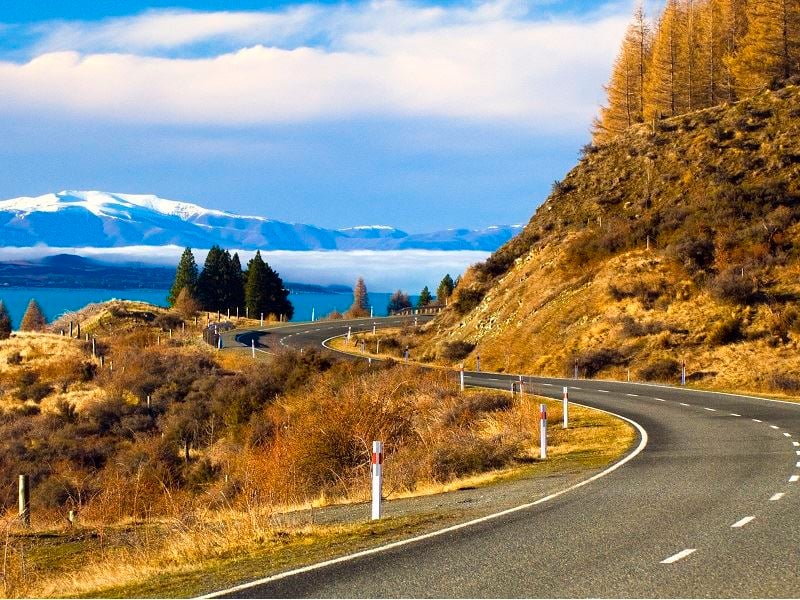
Aoraki/Mount Cook is New Zealand’s highest peak at 3,724 metres (about 12,200 feet), and it towers over the central South Island. The park covers around 270 square miles and includes most of the country’s highest mountains, with many peaks close to or above 3,000 metres.
You don’t need to be a mountaineer to enjoy it. The Hooker Valley Track is an easy, mostly flat walk of about 10 kilometres return, with swing bridges and big views of the mountain and a glacial lake. The Tasman Glacier, New Zealand’s longest, is also here. There are hundreds of species of plants, including the Mount Cook buttercup, the world’s largest buttercup. The mountain is sacred to Ngai Tahu, so please treat the area with respect. Stay overnight if you can, as the stars here are extraordinary. Start planning with our South Island holidays.

#7 - Mount Aspriring
Mount Aspiring National Park lies between Fiordland and Aoraki/Mount Cook, covering more than 1,370 square miles of mountains, glaciers and beech forest. It forms part of Te Wahipounamu, the South-West New Zealand World Heritage Area, whose name means “the place of greenstone” (pounamu).
Wanaka is the natural gateway, and the park is brilliant for walking. The Routeburn Track, which crosses into neighbouring Fiordland, is one of the country’s Great Walks, while the Gillespie Pass Circuit is a more challenging option for experienced walkers. If you’d like something shorter, the Rob Roy Glacier walk is a lovely day trip from Wanaka. It’s the kind of park that feels remote, so it’s a good choice if you want to get away from it all. See more on our Queenstown & Fiordland page.

#8 - Egmont
Egmont National Park, also known as Te Papakura o Taranaki, is on the west coast of the North Island and dominated by Mount Taranaki. This dormant volcano is a beautifully symmetrical cone, and it’s so recognisable that it doubled as Japan’s Mount Fuji in The Last Samurai.
The park is around 130 square miles. Rainfall is high, which is why the lower slopes are so lush and green, so bring a waterproof whatever the season. There are plenty of day walks, including the Pouakai Tarns, where on a still day the mountain reflects in the water. Climbing the summit is a serious undertaking, especially outside summer, so go with a guide if you’re not experienced, and check conditions first.

#9 - Whanganui
Whanganui is in the central North Island, around 290 square miles of forest and river. Its heart is the Whanganui River, New Zealand’s longest navigable river, and the best way to see the park is on the water. Canoeing and kayaking trips run for anything from a day to five days on the Whanganui Journey, which is one of New Zealand’s Great Walks (done by paddle, not on foot). Jet boating is another option.
On land, there are forest walks and the famous “Bridge to Nowhere”, an old concrete bridge hidden in the bush. The forests are also home to brown kiwi, though they’re nocturnal and shy, so sightings are a bonus rather than a promise. The river has a deep significance to the local iwi, and understanding this adds a lot to a visit.

#10 - Kahurangi
Kahurangi sits at the north-west tip of the South Island, and at around 1,700 square miles it’s the second-largest national park in New Zealand. It’s one of the country’s wildest and most varied places, with mountains, forests, caves and a rugged coastline.
The star attraction is the Heaphy Track, a multi-day Great Walk and one of the best in the country. It crosses mountains and tussock plains before dropping to a wild, palm-fringed West Coast shoreline. Mountain bikers can ride it too, but only during the winter months, so check dates before you plan. The park is home to rare plants and wildlife, including the great spotted kiwi, so tread carefully and stay on the paths. It’s a brilliant pairing with a trip to the nearby Nelson & Abel Tasman region.

We’ve been planning New Zealand holidays for over two decades, so we know how to fit the national parks together sensibly, with realistic driving times and a bit of breathing space. A few ideas to start:
How many national parks are there in New Zealand?
There are 13 national parks across the North and South Islands. Tongariro is the oldest, while Abel Tasman is the smallest.
Which national park is best for first-time visitors?
It depends on your interests, but Fiordland and Aoraki/Mount Cook are two of the most popular choices, with spectacular scenery and a good range of walks, cruises and viewpoints.
What is the best national park for walking?
All of them have something to offer. For multi-day walking, look at the Great Walks in Fiordland, Mount Aspiring, Abel Tasman and Kahurangi. For a famous day hike, the Tongariro Alpine Crossing is hard to beat.
Do you need to book walks and huts in advance?
For the popular Great Walks, yes. Huts and campsites on tracks such as the Milford, Routeburn, Abel Tasman and Heaphy often fill up months ahead, especially from late October to April.
What should you pack for New Zealand’s national parks?
Layers, a good waterproof, sturdy walking shoes, sun protection and insect repellent for sandflies. The weather can change quickly in the mountains, so be prepared even for short walks.


Sign up to our newsletter
Be the first to know about our exclusive offers and holiday inspiration by email.