New Zealand Highlighter
Auckland
13 nights
From
€7,199
pp

Author: Chris, Programme Director
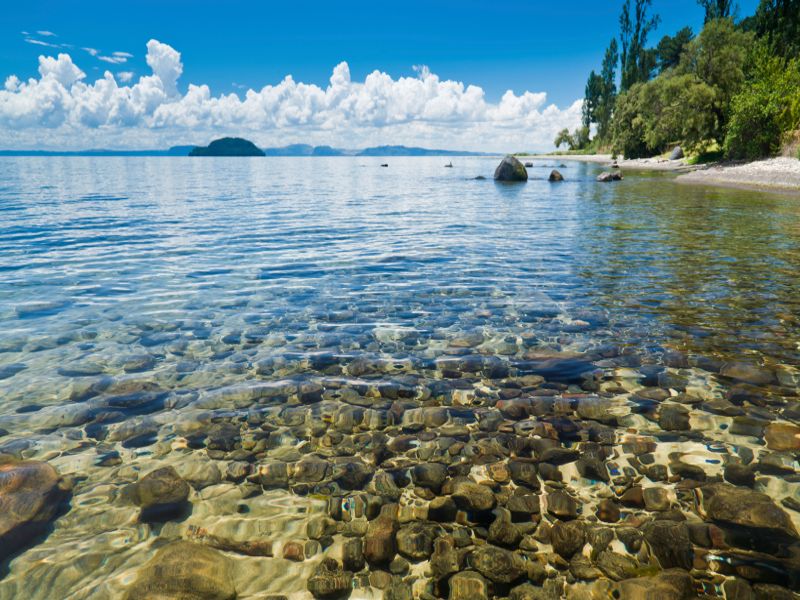
Ask anyone who’s travelled in New Zealand to sum it up in a word, and the answer is often “epic”. It’s a small, remote country with a huge range of scenery: turquoise lakes fed by ancient glaciers, vineyards rolling across sunny plains, snow-dusted volcanoes and deep, mysterious fjords. It’s why the one thing we always tell people to pack is a good camera.
It’s also why Peter Jackson chose to film here. He grew up in Pukerua Bay, on the coast north of Wellington, making amateur films with his friends. So when he got the chance to film The Lord of the Rings, shooting at home was the obvious choice. The films were a global hit, tourism took off and New Zealand has been a favourite for film-makers ever since, including Jackson’s own Hobbit trilogy.
Here’s an honest word before you go. Many of the sets were temporary and were taken down after filming, so on a lot of these stops you’ll be looking at a landscape rather than a set. But that’s the magic: the places are real, and standing in them brings the films back. Our tip is to take a screenshot or two with you and match the view. For a ready-made route, take a look at our Lord of the Rings Scenic Explorer Self-Drive, or browse our Auckland holidays as a starting point.

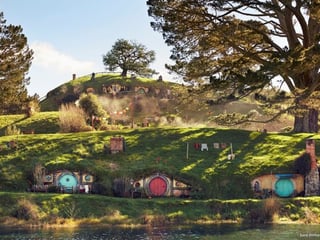
For many fans, this is the highlight. Matamata is a quiet farming town in the Waikato region, and just outside it, on a working sheep farm, Jackson built the Hobbiton set. Unlike most of the sets, it was rebuilt permanently for The Hobbit and is now one of New Zealand’s best-loved attractions.
Over 40 hobbit holes dot the rolling hills, including Bag End, home of Bilbo and later Frodo Baggins. The gardens are lovingly kept, which makes it feel like a living village. The hobbit holes are mostly facades, so you can’t wander inside, but the doors are charmingly tiny, and the detail is superb.

You’ll also see the Party Tree, where Bilbo celebrates his 111th birthday, and the Green Dragon Inn, where tours end with a drink. Visits are by guided tour only, so book ahead, especially in summer. If you’d like to stretch your legs afterwards, the walk to Wairere Falls, the tallest waterfall on the North Island at 153 metres, is nearby. It’s a steep climb, so allow a few hours.

New Zealand has some wonderful place names, and Piopio is among the best. It’s in the Mangaotaki Valley, roughly 40 minutes south of Waitomo and its famous glow-worm caves. This is where Radagast the Brown appears in An Unexpected Journey, and the area’s native forest is easy to picture on screen. It’s a quieter stop and many visitors drive straight through, but it’s an easy detour if you’re heading south from Waitomo.

A couple of hours further south, Tongariro National Park provided the bleak, volcanic landscape of Mordor. Mount Ngauruhoe played Mount Doom, and the area’s craters, lava fields and steaming vents make the choice obvious.
The Tongariro Alpine Crossing is the famous walk, about 12 miles in a long day, usually six to eight hours. It’s spectacular, but it’s a demanding walk, and weather on the mountain changes quickly, so go prepared and check conditions first. One point of respect: Ngauruhoe is sacred to Maori, and walkers are asked not to climb to the summit.

Another good stop is Tawhai Falls, near Whakapapa Village, known as Gollum’s Pool, where Faramir’s rangers spot Gollum fishing. We write more about the park in our guide to New Zealand’s national parks.
Wellington is a must for any Jackson fan. He taught himself film-making here, making gloriously gory low-budget films with friends, before founding the special effects company Weta Workshop. It’s named after the weta, a large and rather odd-looking native insect.
The workshop is based in the suburb of Miramar and offers tours where you can see props, armour, weapons and models from the trilogies, plus the team’s Oscars. Book ahead, as tours can fill up.

Out of town, Kaitoke Regional Park was the setting for Rivendell, and Mount Victoria, in the city itself, is where the hobbits hid from the Black Riders. Beyond the films, Wellington has great museums, a lively waterfront, and a food and coffee scene that’s among the best in the country. Read more on our Wellington page.

The ferry from Wellington to Picton takes around three and a half hours, and it’s a scenic crossing, with the chance of seeing dolphins. We’d recommend grabbing a window seat and being on deck as you sail into the Marlborough Sounds.
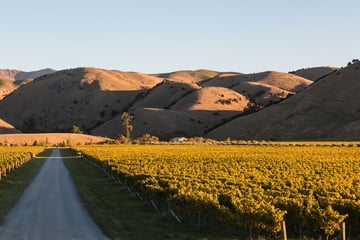
Blenheim, around half an hour from Picton, is the heart of the Marlborough wine region and a relaxed, sunny town. Depending on your crossing time, you might be there in time for lunch.
For Tolkien fans, the draw is the Pelorus River, where the thrilling barrel run in The Desolation of Smaug was filmed. The views from Pelorus Bridge are lovely, and you can recreate the scene, in a much gentler way, on a kayak tour. Read more on our Blenheim & Marlborough page.

Driving from Blenheim to Christchurch takes the best part of a day, around five hours without stops, so take your time. We’d suggest taking the coastal route and stopping at Kaikoura, the country’s best-known spot for whale and dolphin watching. Sightings can’t be guaranteed, but the success rate is high and tours are popular, so book well in advance. In some seasons, you can even swim with dusky dolphins. (Not to be confused with the fictional “Kaihoro” from Jackson’s early film Bad Taste.)
Christchurch is a good base for the High Country. The city was badly hit by earthquakes in 2010 and 2011, and its rebuild has given it a fresh, creative energy. It’s also a historic gateway for Antarctic expeditions, including those led by Scott and Shackleton, which fits Jackson’s themes of adventure and exploration.
From Christchurch, you can head out to Mount Sunday, the site of Edoras, the capital of Rohan. The film team spent months building the set on this hill in the Rangitata Valley. The set is long gone, but the setting, a lone hill surrounded by mountains, is dramatic. It’s a long day trip, so allow plenty of time or stay overnight. Find out more on our Christchurch & Canterbury page.
South of here, Aoraki/Mount Cook, New Zealand’s highest mountain, is a place of great significance to Maori. Sir Edmund Hillary trained here before climbing Everest. The area is part of the Aoraki Mackenzie International Dark Sky Reserve, one of the largest in the world, so it’s perfect for stargazing. Nearby, Lake Pukaki was used for the Laketown scenes in The Desolation of Smaug, and Braemar Station provided backdrops for The Hobbit, including the Warg chase and the Misty Mountains.

In the heart of the South Island, Mackenzie Country is one of the most beautiful areas to drive through, with big skies, tussock grass and mountains on the horizon. Twizel is where the epic Battle of the Pelennor Fields was filmed, and you’ll likely recognise the area from several other scenes. It’s best taken slowly.

The Mackenzie Basin leads to Queenstown, New Zealand’s adventure capital. Bungee jumping, jet boating, heli-biking and snowmobiling are all on offer, as well as gentler pursuits such as hiking, cycling and kayaking on Lake Wakatipu.
It’s also hugely popular with film fans. Arrowtown, a charming former gold-mining village, is close to where Arwen faced the Black Riders at the Ford of Bruinen.

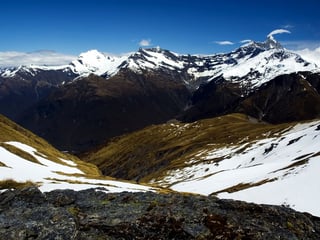
The wider area includes Earnslaw Burn, used as Bilbo and the dwarves left Rivendell. Be aware that this is a challenging area, so most visitors see it by helicopter or with a guide rather than on foot. Deer Park Heights has also appeared on screen, and nearby Glenorchy was used for Isengard and Lothlórien. Our Queenstown & Fiordland page has more detail on the region.
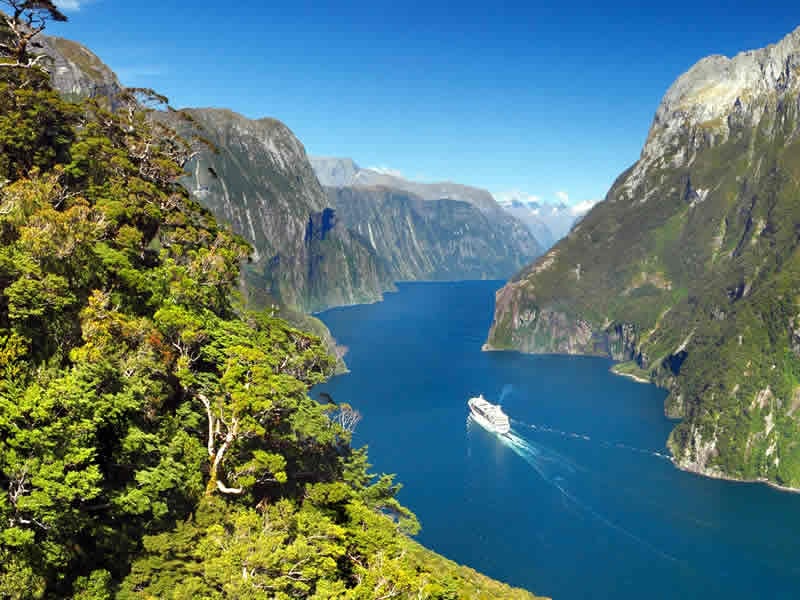
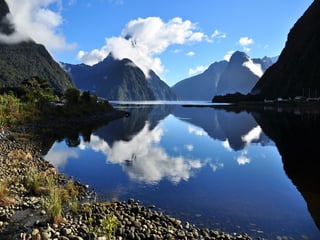
Fiordland isn’t on every Middle-earth route, but it’s well worth the effort if you have time. This is one of New Zealand’s most spectacular landscapes: waterfalls tumbling down sheer cliffs, ancient rainforest, and fjords carved by glaciers over thousands of years. Rudyard Kipling is said to have called it the eighth wonder of the world.
The best-known fjords are Milford Sound and Doubtful Sound. In the films, Fiordland scenery appears in An Unexpected Journey when the company is carried off on the backs of eagles, and it also provided the backdrop for the Argonath, the Gates of Gondor, whose giant statues were digitally added. A visit can be done as a long day trip from Queenstown, but we’d suggest staying in Te Anau if you can.

The best thing about Jackson using his home country is that he filmed all over it. That means a Middle-earth trip is also a trip to some of New Zealand’s most beautiful and varied places, so you can combine film-spotting with wine, wildlife, walking and good food.
We’ve been planning New Zealand holidays for over two decades, and we can help you build a route that fits your interests and your pace. A few ideas to start:
Can you visit the Hobbiton movie set?
Yes. Hobbiton, near Matamata in the Waikato region, is open to visitors on guided tours. It’s one of the few sets kept permanently, so we’d recommend booking ahead, especially in summer.
Are the other filming locations still there?
The landscapes are, but many sets were temporary and removed after filming. At places such as Mount Sunday and Twizel, you’ll be seeing the scenery rather than a set, which is part of the appeal for many fans.
How long do you need for a Middle-earth trip?
To cover both islands comfortably, we’d suggest around two weeks or more. With less time, focus on a region, such as Matamata, Tongariro and Wellington on the North Island, or Queenstown and Mackenzie Country on the South.
When is the best time to visit?
Summer (December to February) offers the warmest weather and the longest days, but spring and autumn are quieter and beautiful. Mountain areas such as Tongariro and Aoraki/Mount Cook can have changeable weather at any time of year.
Do you need to be a fan to enjoy it?
Not at all. The locations are some of New Zealand’s most beautiful places, so the trip works whether or not you’ve seen the films. It’s an easy way to see the country’s highlights.

Sign up to our newsletter
Be the first to know about our exclusive offers and holiday inspiration by email.