
New Zealand Highlighter
Auckland
13 nights
From
€7,199
pp

New Zealand has been stopping photographers in their tracks for as long as we can remember. After more than two decades of helping UK travellers explore this remarkable country, we're still regularly floored by what's around the next bend – and that feeling of genuine surprise never gets old. This is a place where the landscapes feel almost impossibly cinematic: volcanic plateaux that steam and hiss, fjords that plunge into near-black water, glaciers that groan and creak at the edge of rainforest, and coastlines that stretch for nearly 15,000 kilometres without ever becoming boring.
What makes New Zealand so extraordinary for photographers – amateur or serious – is its sheer variety. You don't have to travel far between entirely different types of landscape, light and mood. This guide brings together our personal favourites: the ten most photogenic wonders in New Zealand, and exactly where to point your camera when you get there.
Our top 10:
1 Lakes and mountains
2 Aerial adventures
3 Lord of the Rings
4 Stargazing
5 Thrills on the water
6 Coastal
7 Waterfalls
8 Sunrises and sunsets
9 Farms and vineyards
10 Biking and hiking trails

#1
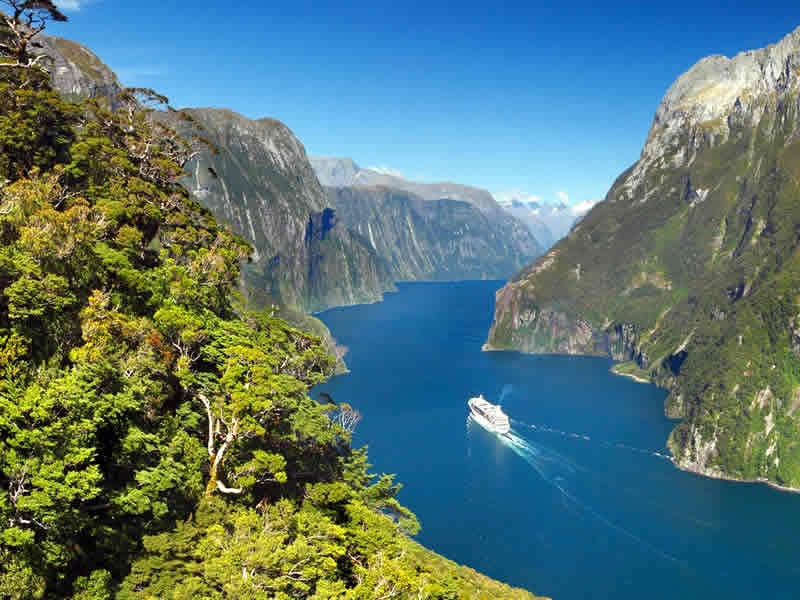
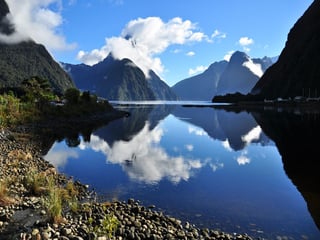
The relationship between water and mountain in New Zealand is something you simply have to see in person. Lake Taupo – at 616 square kilometres, roughly the size of Singapore – glows copper and gold at sunset, while the volcanic cones of the central plateau loom in the background. In Tongariro National Park, the Emerald Lakes sit in a surreal landscape of lava fields and geothermal vents that steam as if the earth itself is still figuring out what it wants to be. The Mirror Lakes near Milford Sound reflect the surrounding peaks with almost eerie precision on calm days, creating a double-world effect that makes you question which way is up.
Sir Edmund Hillary, who would go on to be the first man to summit Everest, first found his mountaineering legs on the peaks of his homeland – and it's not hard to understand why Aoraki/Mount Cook captured his imagination. At 3,724 metres, it's the highest peak in Australasia, and its presence is commanding from almost every direction.
Get the shot: One of the most iconic images in New Zealand photography is the twin reflection of Mount Cook and Mount Tasman in the still, dark waters of Lake Matheson on the West Coast. The lake's natural tannins give the water a deep, ink-like surface that acts as a near-perfect mirror on windless mornings. Arrive early – ideally at first light – before the breeze picks up and ripples the surface. The reflections walk is well-signposted from Fox Glacier village and takes around an hour return.
Inspired? Our South Island Natural Discovery Self-Drive takes in Lake Matheson, the West Coast glaciers and much more, with accommodation pre-booked on every night.

#2
New Zealand rewards those who get airborne. The country's dramatic topography – glaciers, fjords, volcanic peaks, endless coastline – takes on an entirely different quality from above, and the pilots who run scenic flights here know exactly where the light falls and which angles deliver the best shots. Whether you're gliding above the ice fields of Fox or Franz Josef Glaciers, banking over Milford Sound, or hovering above the patchwork farmland of the Waikato, the perspectives are extraordinary.
For those who prefer their aerial adventures with rather more adrenaline, the SkyWalk at Auckland's Sky Tower offers unforgettable cityscapes from 192 metres up – no harness, just a slim ledge and the city spread far below.
Get the shot: For the most dramatic aerial photography in the country, take a skydive above Lake Wakatipu in Queenstown. The Remarkables range, the winding shoreline of the lake, and the town itself laid out below create a view that no ground-based photograph can replicate. Hire a professional photographer to freefall alongside you, or attach your own camera — either way, this is one you'll be showing people for years.
Inspired? If Queenstown and its aerial thrills are on your bucket list, take a look at our Queenstown & Fiordland holidays or our wider range of adventure holidays in New Zealand.

#3
Peter Jackson grew up in Pukerua Bay, north of Wellington, making amateur films with his friends and dreaming big. When he came to adapt Tolkien's epic for the screen, he barely had to look beyond his own backyard. The landscapes of New Zealand – ancient forests, volcanic peaks, sweeping river plains – slotted almost perfectly into Middle-earth, and more than two decades on from the original trilogy, fans still travel from all over the world to walk where the Fellowship walked.
The filming locations are scattered across both islands. Earnslaw Burn, a spectacular glacial valley near Queenstown, doubled as Dimrill Dale in The Hobbit: An Unexpected Journey. Kaitoke Regional Park, just north of Wellington, was transformed into the Elven haven of Rivendell. And the Tongariro Crossing takes you past the brooding cone of Mount Ngauruhoe – Mount Doom itself – on one of the most dramatic day walks in the country.
Get the shot: For Tolkien enthusiasts, Hobbiton is non-negotiable. Jackson spotted the rolling green farmland around Matamata in the Waikato and knew immediately it was the Shire. The sets were rebuilt for The Hobbit trilogy and have remained as permanent structures ever since. The best time to visit is late afternoon, when golden light falls across the hobbit holes and the Party Tree, and the crowds begin to thin.
Inspired? Our dedicated Lord of the Rings Scenic Explorer Self-Drive is built specifically around the key filming locations across both islands – one of our most popular itineraries for Tolkien fans.

#4
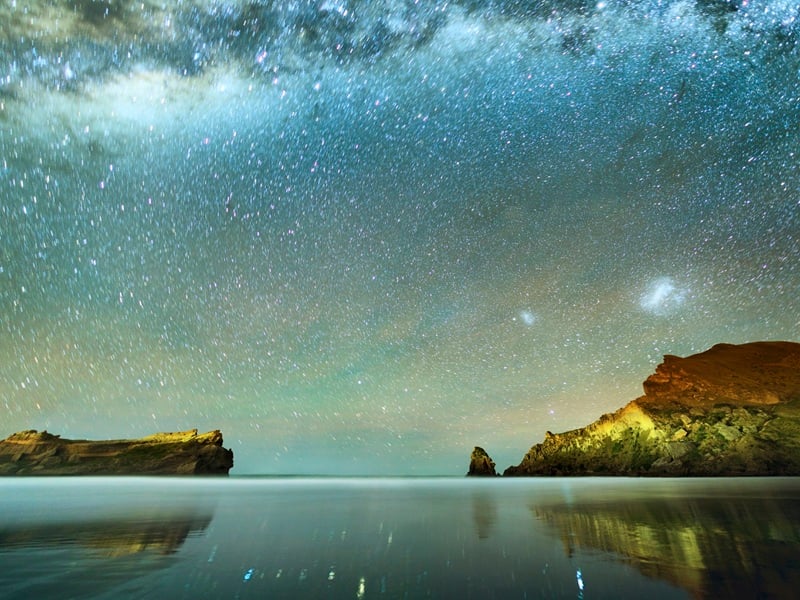
Away from the main cities, New Zealand at night is something of a revelation. Population density is low, light pollution minimal, and the skies – particularly on the South Island – can feel impossibly clear and full. Add the fact that New Zealand sits in the southern hemisphere, giving you access to constellations and galaxies rarely visible from the UK, and you have a stargazer's paradise.
The Aoraki Mackenzie International Dark Sky Reserve is one of only a handful of such designations in the world and the only one in the southern hemisphere. Centred around Lake Tekapo and the Mackenzie Basin, it covers over 4,300 square kilometres of protected dark sky. The Mount John Observatory here runs guided stargazing sessions, with powerful telescopes trained on the Milky Way's core, the Magellanic Clouds and nebulae that never appear in British skies.
Get the shot: Castlepoint in the Wairarapa – a wind-battered headland on the east coast, around 90 minutes from Wellington – offers exceptional stargazing on clear nights, with near-zero light pollution and the added photographic bonus of a 19th-century lighthouse and the dramatic sea stacks known as 'the Castle'. Captain Cook named the point during his circumnavigation of New Zealand in the 1770s, struck by its distinctive profile from out at sea.
Inspired? The Mackenzie Basin and Lake Tekapo feature in several of our South Island itineraries. Browse our South Island holidays or call us on 01342 310 581 to build a stargazing stop into your itinerary.
#5
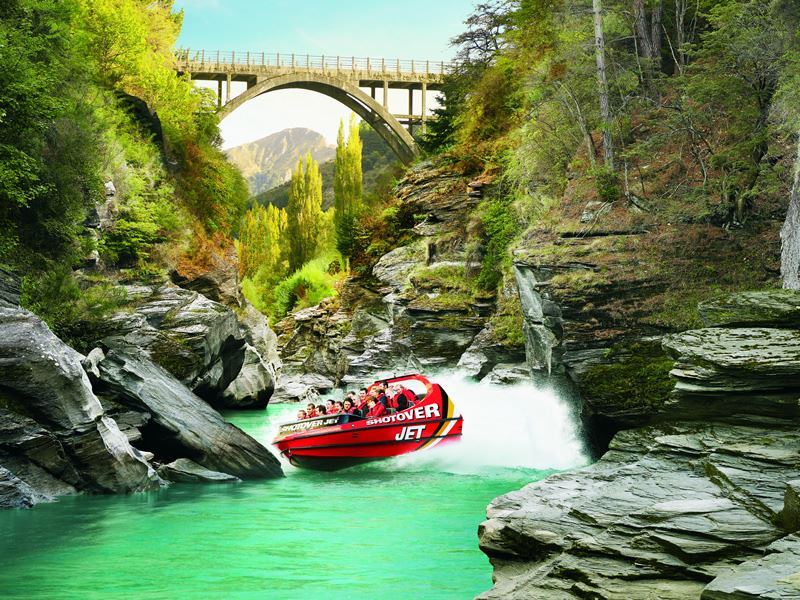
The jetboat was a genuinely New Zealand invention – designed by Bill Hamilton in the 1950s to navigate the shallow, braided rivers of the Canterbury Plains – and it has since become one of the country's most iconic activities. These craft are extraordinary pieces of engineering: drawing only centimetres of water, they can spin 360 degrees in their own length and reach speeds that press passengers back in their seats. Popular venues include the Waikato River near Taupo, where you come within a hair's breadth of the thundering Huka Falls, and Rotorua, where the surrounding geothermal scenery makes every moment photogenic.
Get the shot: The Shotover Jet in Queenstown is the benchmark experience. Carving through the narrow Shotover River canyon at over 85km/h, coming close enough to the rock walls to make first-timers gasp, this is as thrilling as jet boating gets anywhere in the world. Fit a GoPro, brace yourself, and make sure the video is running before the boat leaves the dock.
Inspired? Water thrills, hiking and Queenstown adventures all feature in our Drive and Hike Around the South Island self-drive itinerary.
#6
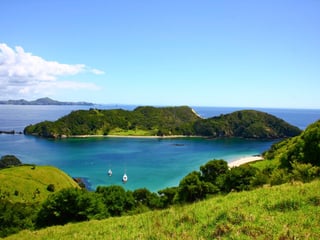
New Zealand's coastline runs for nearly 15,000 kilometres – longer than the equator when you factor in all the inlets and islands. Along that vast stretch you'll find everything from the warm, sheltered bays of the Bay of Islands and its 144 islands dotted across glittering water, to the wild, wind-hammered shores of the Southland coast where waves roll in uninterrupted from Antarctica. Abel Tasman National Park at the top of the South Island is a coastal photographer's dream: golden-sand beaches backed by native bush, crystal-clear water shifting from jade to deep blue, and a resident marine population that includes dolphins, fur seals and little blue penguins.
Get the shot: Nugget Point in the Catlins is one of the most dramatic coastal viewpoints in the country – a long finger of headland ending at a 19th-century lighthouse, with a scatter of wave-lashed sea stacks breaking the surface below. Visit between December and February for the best chance of spotting elephant seals hauled out on the rocks. The light at either end of the day here is extraordinary.
Inspired? The Bay of Islands, Abel Tasman and the dramatic Southland coast all feature in our Classic New Zealand Self-Drive and North to South and All That's Inbetween itineraries.

#7
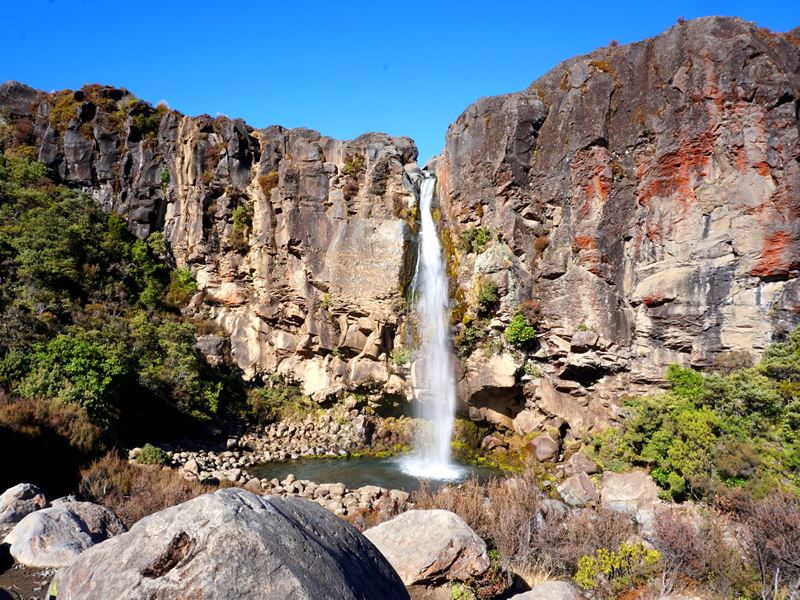
Waterfalls are woven into New Zealand travel in a way that surprises many first-time visitors. You'll encounter them from the road, on beaches, beside hiking tracks and tumbling off the edges of fjord walls. In Tongariro National Park, the Taranaki Falls pour 20 metres over the rim of an ancient lava flow – a lovely two-hour loop walk through beech forest leads you there. In Fiordland, Sutherland Falls plunges 580 metres from a hanging valley above the Milford Track in three dramatic stages, making it one of the tallest waterfalls in the world.
Get the shot: The Devil's Punchbowl Falls in Arthur's Pass National Park are the most spectacular waterfall in the Canterbury region, dropping 131 metres in a single near-vertical plunge. The short walk from the village (around 45 minutes return) leads through beech forest to a viewing platform that frames the falls perfectly. Go in the morning, and if it rained overnight, even better – the flow will be extraordinary.
Inspired? Arthur's Pass sits on the route between Christchurch and the West Coast. Our A Taste of the South Self-Drive is a brilliant way to explore this part of the South Island at your own pace.

#8
The quality of light in New Zealand is unlike anywhere else we've experienced, and we've sent our teams across a lot of the world. There's a clarity to it – perhaps the clean air, perhaps the southern hemisphere latitude – that makes colours richer and shadows sharper. This is most obvious during the golden hours. The famous Lone Tree of Lake Wanaka – a solitary willow rising from the shallows near the southern shore – is one of the most photographed subjects in the country, and it earns its reputation when silhouetted against a deep orange sky. Lake Rotorua at dawn develops a shimmering golden patina as the geothermal mist catches the early light – an effect that's genuinely otherworldly.
Get the shot: Te Mata Peak near Napier stands 399 metres above the Heretaunga Plains and offers 360-degree views taking in Hawke's Bay, the Kaweka Ranges, and on clear days even the volcanic cones of the central plateau in the far distance. You can drive to the summit, which makes a sunrise visit achievable even without a long hike. Come for the colours, stay for breakfast in Havelock North below, then head into Napier itself – one of the world's finest collections of Art Deco architecture.
Inspired? Napier, the Hawke's Bay wine country and the spectacular East Coast are best explored at a leisurely pace. Browse our Napier & Hawke's Bay holidays for ideas, or our Food & Wine Holidays if the vineyards are calling.

#9
New Zealand has around six million people and roughly ten times as many sheep. Drive through the South Island in particular and the pastoral landscape rolls on for as far as the eye can see – neat rows of vines on sun-baked terraces, ancient merino flocks on the high-country stations, and the occasional working sheepdog rounding up a mob with a precision that's hypnotic to watch.
New Zealand's wine regions run roughly 1,600 kilometres from subtropical Northland to the southernmost vineyards of Central Otago. Marlborough is the biggest and best-known – the Sauvignon Blanc produced in the Wairau and Awatere Valleys put New Zealand on the international wine map – but for those wanting to venture further, the Waipara Valley north of Christchurch and the Waitaki Valley in North Otago offer spectacular vineyard scenery with far fewer visitors. Hawke's Bay, where missionaries planted the first vines in the 1850s, combines excellent wine with a full programme of food festivals and cultural events.
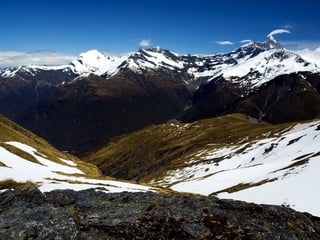
Get the shot: Sunset in any vineyard is worth waiting for, but the South Island's high-country farms offer some of the most jaw-dropping agricultural landscapes on earth. The contrast of golden tussock grassland with dark schist rock and the distant Southern Alps is a combination that renders almost any camera capable of producing something remarkable.
Inspired? We have a dedicated range of Food & Wine Holidays taking in New Zealand's finest wine regions, or explore Marlborough & Blenheim independently on one of our self-drive itineraries.

#10
New Zealand's trail network is one of the finest in the world, and the scenery it passes through ranges from subtropical coastal bush to high alpine wilderness. The Great Walks – eleven officially designated multi-day routes – represent the very best of the country's backcountry, but there are thousands of shorter trails that deliver equally memorable moments without requiring a week in the mountains.
The Milford Track, at 53.5 kilometres through the heart of Fiordland, is the most celebrated – four days of beech forest, hanging valleys and the drama of Mackinnon Pass, where the views on a clear day stretch further than seems possible. The Tongariro Alpine Crossing, a 19.4-kilometre day walk across the volcanic plateau past the Emerald Lakes and Mount Ngauruhoe, is frequently cited as the finest single-day walk in the country. For mountain bikers, the Otago Central Rail Trail offers 152 kilometres of former railway line through gorges, past historic stations and over stone viaducts. And Te Mata Park near Napier features trails for all levels, including 'The Nose' – a downhill run from the summit ridge that serious bikers talk about with quiet reverence.
Get the shot: The Kawakawa Bay section of the Great Lake Trail on Lake Taupo is one of the most photogenic cycling routes in the country. Running from Kinloch through native bush, wetlands and deep ravines to the wide, still waters of Kawakawa Bay, the track takes around three hours by bike or six on foot. Allow time for a dip in the lake afterwards – you'll have earned it.
Inspired? Hikers and bikers are well served by our Drive and Hike Around the South Island itinerary. For those who prefer a guide and a small group, our Small Group Tours are a great option – expert-led, intimate, and with all the logistics handled for you.

Plan your New Zealand photography holiday with New Zealand Sky
At New Zealand Sky, we've been crafting holidays to New Zealand for over 20 years — and the landscapes in this guide are ones our team have stood in, photographed and fallen in love with themselves. Every itinerary we put together is shaped by that genuine first-hand knowledge: the routes, the timing, the light conditions, the moments that photographs can't quite capture but that stay with you for life.
All our holidays include pre-booked accommodation on every night, hand-picked by our New Zealand specialists, and 24/7 support while you're travelling. Whether you're looking for a dedicated Lord of the Rings self-drive, a luxury lodge experience, a small group tour or a fully tailor-made adventure, we'd love to help you plan it properly.
Browse all our New Zealand self-drive holidays or call our team on 01 6649930 – open 9am–7pm Monday to Friday, and 9am–5pm at weekends.
New Zealand rewards photographers in every season, but late summer to early autumn (February to April) is hard to beat. The light is warm, the crowds have thinned after the peak December–January period, and long evenings give you extended golden hour shooting time. Winter is spectacular if you're after dramatic snow-capped peaks and moody fiord scenes, while spring brings wildflower displays and the best conditions for wildlife spotting.
Not at all — modern smartphones produce genuinely impressive results, and New Zealand's landscapes are so dramatic that they do a lot of the heavy lifting. That said, if you're keen to capture the night skies above the Aoraki Mackenzie Dark Sky Reserve or fast-moving subjects like the Shotover Jet, a camera with manual settings will give you more flexibility. Whatever you're shooting with, timing matters far more than equipment — being at Lake Matheson at first light will transform your results.
Very manageable, as long as you plan your route sensibly. Roads are generally good and signage is clear, but factor in that South Island driving is slower than it looks on a map — mountain passes and the sheer number of places you'll want to stop mean journey times stretch pleasantly. Our self-drive itineraries have been road-tested by our team, so the pacing is realistic rather than optimistic.
Most of them, yes. Lake Matheson, Hobbiton, the Marlborough vineyards and Te Mata Peak (which you can drive to the top of) are all easy visits. The Tongariro Alpine Crossing and Devil's Punchbowl Falls involve more walking, but neither requires anything beyond a reasonable level of fitness and decent footwear. If you're unsure what suits your group, just give our team a call — we're good at finding the right fit for all ages and abilities.

Sign up to our newsletter
Be the first to know about our exclusive offers and holiday inspiration by email.